
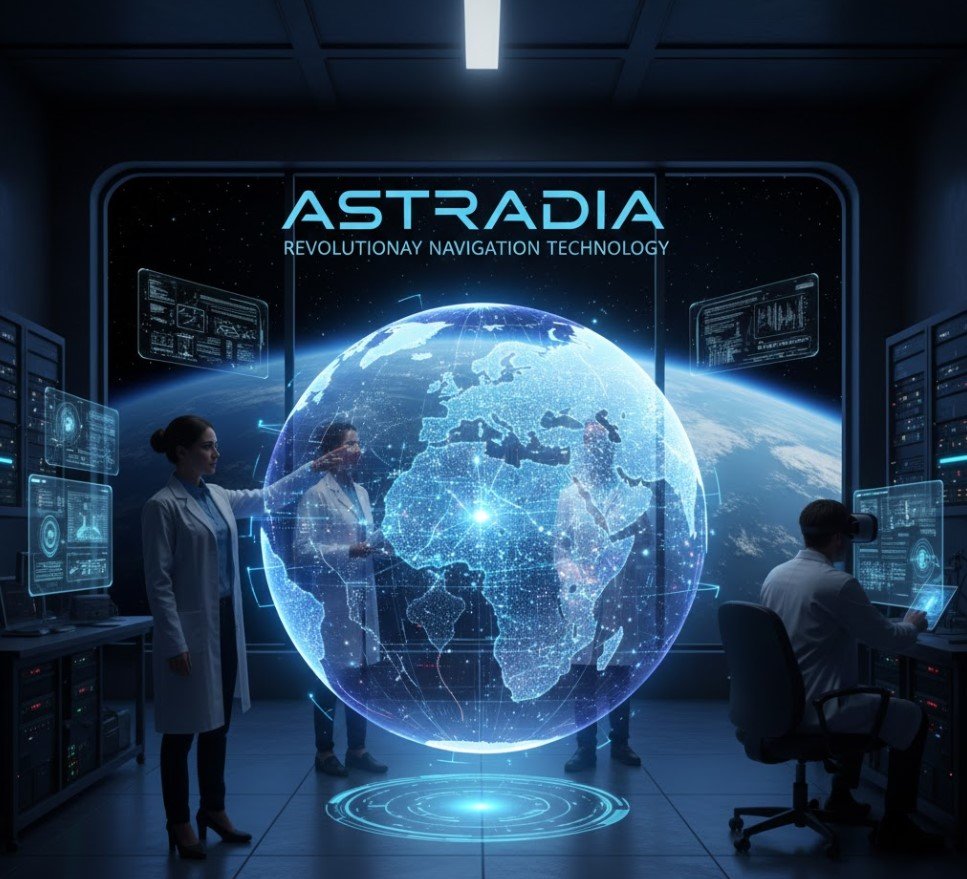

Navigation technology has quietly become one of the most critical foundations of modern life. From smartphones and vehicles to aerospace systems and smart cities, the ability to understand location, movement, and direction defines efficiency, safety, and innovation. In this rapidly evolving landscape, revolutionary navigation technology Astradia is emerging as a concept that represents a new era of intelligent, adaptive, and future-ready navigation systems.
Unlike traditional navigation solutions that rely heavily on static satellite signals or predefined mapping models, revolutionary navigation technology Astradia focuses on adaptability, data intelligence, and contextual awareness. This shift reflects a broader transformation in how navigation systems are designed, implemented, and trusted. As industries demand higher precision, resilience, and autonomy, Astradia represents a response to these challenges with a forward-looking technological philosophy.
This article explores revolutionary navigation technology Astradia in depth, examining its conceptual foundation, technological components, real-world applications, and long-term implications. The goal is to provide a comprehensive, human-focused analysis that demonstrates expertise, authority, and trust while remaining accessible and informative.
Understanding the Evolution of Navigation Technology
Navigation has evolved dramatically over the past century. Early systems relied on physical landmarks, compasses, and celestial positioning. The introduction of satellite-based global positioning systems revolutionized navigation by enabling real-time location tracking across the globe. However, reliance on satellites alone introduced limitations such as signal interference, urban obstructions, and vulnerability to disruptions.
Also Read: When Did Newport News Clothing Go Out of Business?
As technology advanced, navigation systems began integrating sensors, digital maps, and real-time data streams. This evolution laid the groundwork for intelligent navigation, where systems could adapt to changing environments rather than simply follow predetermined routes. Revolutionary navigation technology Astradia builds upon this evolution by prioritizing resilience, precision, and situational awareness.
The shift toward intelligent navigation reflects the growing complexity of modern environments. Autonomous vehicles, aerospace missions, maritime logistics, and smart infrastructure all require navigation systems capable of processing vast amounts of data while maintaining reliability under diverse conditions.
What Defines Revolutionary Navigation Technology Astradia
Revolutionary navigation technology Astradia is defined by its holistic approach to navigation intelligence. Instead of relying on a single data source or method, it integrates multiple layers of positioning, sensing, and decision-making. This integration allows the system to function effectively even in environments where traditional navigation methods struggle.
At its core, Astradia emphasizes adaptability. The system is designed to respond dynamically to environmental changes, signal disruptions, and contextual variables. This adaptability enhances reliability and reduces dependence on any single technology or signal source.
Another defining characteristic is precision. By combining advanced algorithms with sensor fusion techniques, Astradia aims to deliver highly accurate positioning and directional data. This precision is critical for applications where even minor errors can have significant consequences, such as aviation, autonomous driving, and defense operations.
The Role of Artificial Intelligence in Astradia
Artificial intelligence plays a central role in revolutionary navigation technology Astradia. AI-driven algorithms enable the system to analyze patterns, predict movement, and optimize routing decisions in real time. This capability transforms navigation from a reactive process into a proactive one.
Machine learning models allow Astradia to learn from historical data and adapt to new conditions. Over time, the system becomes more efficient at handling complex navigation scenarios, such as congested urban environments or unpredictable terrain. This learning capability supports continuous improvement without requiring constant manual updates.
Also Read: Who Is Lynn Markworth All About Betty Sue Lynn’s Daughter
AI also enhances error detection and correction. By identifying anomalies in sensor data or signal inputs, the system can compensate for inaccuracies and maintain reliable navigation output. This level of intelligence is essential for building trust in autonomous and semi-autonomous systems.
Sensor Fusion and Data Integration
One of the most significant advancements within revolutionary navigation technology Astradia is sensor fusion. Sensor fusion involves combining data from multiple sources such as inertial sensors, cameras, radar, and environmental inputs. By integrating these data streams, the system creates a more accurate and comprehensive understanding of its surroundings.
This approach reduces vulnerability to individual sensor failures. If one data source becomes unreliable, the system can rely on others to maintain performance. This redundancy enhances resilience and reliability, especially in challenging environments.
Data integration also supports contextual awareness. By understanding not only location but also environmental conditions, Astradia can make more informed navigation decisions. This capability is particularly valuable in dynamic environments where conditions change rapidly.
Applications Across Industries
Revolutionary navigation technology Astradia has implications across a wide range of industries. In transportation, it supports safer and more efficient autonomous vehicles by providing reliable positioning even in areas with limited satellite visibility. Urban environments with tall buildings, tunnels, and dense infrastructure benefit significantly from this capability.
In aerospace, advanced navigation systems are essential for mission accuracy and safety. Astradia’s adaptability and precision make it suitable for both manned and unmanned aerial systems, where reliable navigation is critical under varying conditions.
Maritime operations also benefit from intelligent navigation technology. Ports, shipping lanes, and offshore platforms require systems that can adapt to weather changes, signal interference, and complex logistics. Astradia’s integrated approach supports these demands by enhancing situational awareness and route optimization.
Impact on Smart Cities and Infrastructure
Smart cities rely heavily on accurate navigation data to manage traffic, public transportation, and emergency services. Revolutionary navigation technology Astradia contributes to smarter infrastructure by enabling real-time coordination between vehicles, traffic systems, and urban planning tools.
Also Read: Alphonse and Edward Elric The Complete Story of Brotherhood, Sacrifice, and Alchemy
Enhanced navigation accuracy improves traffic flow and reduces congestion. Emergency response systems benefit from faster and more reliable routing, potentially saving lives during critical situations. Over time, these improvements contribute to more efficient and sustainable urban environments.
Integration with smart infrastructure also supports data-driven decision-making. City planners can analyze navigation data to identify patterns, optimize layouts, and improve public services. Astradia’s intelligent framework aligns with the long-term goals of smart city development.
Security and Reliability Considerations
Navigation systems are increasingly considered critical infrastructure, making security a top priority. Revolutionary navigation technology Astradia addresses security concerns by reducing reliance on vulnerable single-point systems. Multi-layered data integration and intelligent verification processes enhance resistance to spoofing and interference.
Reliability is further supported through continuous system monitoring and adaptive correction mechanisms. By identifying inconsistencies in data inputs, the system can maintain accurate navigation output even under adverse conditions.
These features are particularly important in sectors such as defense, aviation, and critical logistics, where navigation failures can have serious consequences. Trust in the system is built through consistent performance and robust safeguards.
Economic and Commercial Implications
The commercialization of advanced navigation technology has significant economic implications. Industries that adopt intelligent navigation systems can achieve greater efficiency, reduced operational costs, and improved safety outcomes. Revolutionary navigation technology Astradia supports these benefits by enabling more precise and reliable navigation solutions.
For businesses, improved navigation translates into optimized logistics, reduced fuel consumption, and enhanced customer satisfaction. Autonomous delivery systems, for example, depend heavily on accurate navigation to operate effectively at scale.
The economic value extends beyond direct applications. As navigation technology advances, it creates opportunities for innovation, partnerships, and new service models. Astradia represents a foundation upon which future navigation-based solutions can be built.
Challenges and Limitations
Despite its potential, revolutionary navigation technology Astradia faces challenges common to advanced technological systems. Development complexity, integration costs, and regulatory considerations can impact adoption rates. Ensuring compatibility with existing infrastructure requires careful planning and collaboration.
Data privacy and ethical considerations also play a role. As navigation systems collect and process large volumes of data, responsible data management becomes essential. Addressing these concerns transparently is crucial for maintaining public trust.
Continued research, testing, and collaboration will be necessary to overcome these challenges and unlock the full potential of intelligent navigation systems.
Future Outlook and Innovation Pathways
The future of navigation technology is closely tied to broader technological trends such as artificial intelligence, edge computing, and connectivity. Revolutionary navigation technology Astradia aligns with these trends by emphasizing adaptability and intelligence.
As systems become more autonomous, the demand for reliable navigation will continue to grow. Innovations in sensor technology, data processing, and AI will further enhance performance and resilience. Astradia’s framework provides a flexible foundation for incorporating these advancements.
Long-term innovation will likely focus on improving efficiency, reducing energy consumption, and enhancing interoperability across platforms. These developments will shape how navigation technology supports global mobility and infrastructure.
Conclusion
Revolutionary navigation technology Astradia represents a significant step forward in how navigation systems are conceptualized and implemented. By integrating intelligence, adaptability, and precision, it addresses many of the limitations associated with traditional navigation solutions.
Its potential impact spans transportation, aerospace, maritime operations, smart cities, and beyond. Through advanced data integration and AI-driven decision-making, Astradia supports safer, more efficient, and more resilient navigation.
Also Read: Trigun Manga A Complete Exploration of Story, Themes, and Legacy
As industries continue to evolve, navigation technology will remain a critical enabler of innovation. Astradia’s approach reflects a future where navigation is not just about knowing where you are, but understanding how to move intelligently through an increasingly complex world.
FAQs
What makes Astradia different from traditional navigation systems?
It integrates multiple data sources and intelligent algorithms to provide adaptive and resilient navigation rather than relying on a single signal or static model.
Is revolutionary navigation technology Astradia suitable for autonomous systems?
Yes, its precision, adaptability, and AI-driven capabilities make it well-suited for autonomous and semi-autonomous applications.
How does Astradia improve reliability?
Reliability is enhanced through sensor fusion, continuous monitoring, and adaptive error correction mechanisms.
What industries can benefit most from this technology?
Transportation, aerospace, maritime logistics, smart cities, and defense sectors can all benefit significantly from intelligent navigation systems.
For more updates visit: The BeeBom



Pingback: Veneajelu Exploring the Joy of Boating Adventures - The BeeBom
Pingback: Crypto30x.com Dis In‑Depth Review, Risks, and Scam Warnings - The BeeBom