
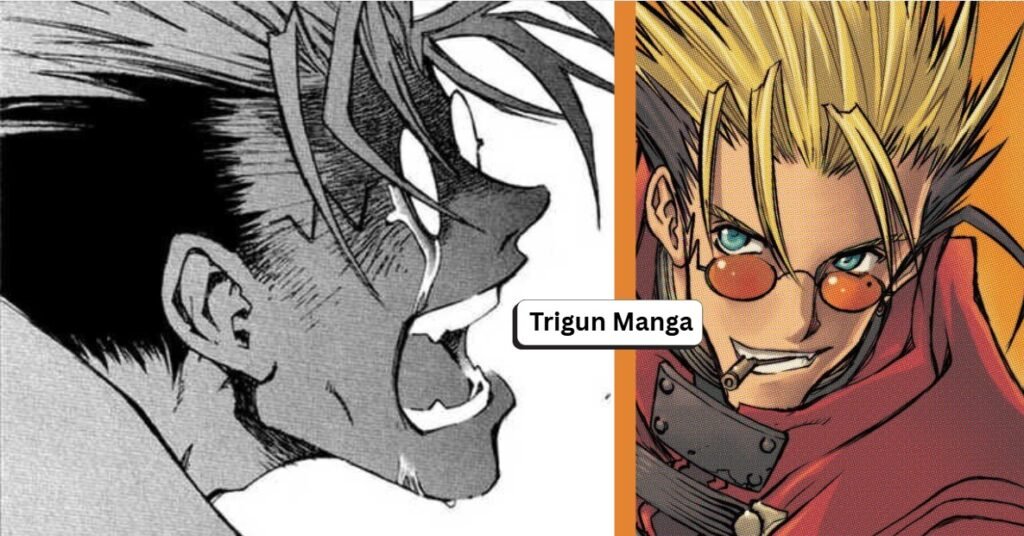

The Trigun manga stands as one of the most distinctive works in Japanese manga history, blending science fiction, western aesthetics, philosophy, and emotional storytelling into a narrative that continues to resonate decades after its debut. Created by Yasuhiro Nightow, the series is far more than a stylized action manga. It is a thoughtful exploration of pacifism, morality, human nature, and survival in a harsh and unforgiving world. While many fans first encountered Trigun through its anime adaptations, the original manga offers a deeper, darker, and more nuanced experience that fully reveals Nightow’s vision.
Since its initial publication in the mid-1990s, the Trigun manga has earned critical acclaim and a loyal global fanbase. It has influenced countless creators, inspired philosophical discussions among readers, and remained relevant through reprints, adaptations, and renewed interest from newer generations. Understanding the Trigun manga means understanding not just its plot, but also its themes, artistic evolution, and cultural significance.
Origins and Publication History of Trigun Manga
The Trigun manga first appeared in 1995 in Tokuma Shoten’s Monthly Shōnen Captain magazine. At the time, Yasuhiro Nightow was an emerging mangaka experimenting with bold art styles and genre fusion. The series initially ran for a short period before the magazine ceased publication, which could have ended Trigun prematurely. Instead, the story was reborn as Trigun Maximum after transferring to Young King Ours, a seinen magazine that allowed Nightow greater creative freedom.
This transition proved crucial to the identity of the Trigun manga. While the early chapters leaned toward lighter tones and episodic storytelling, Trigun Maximum expanded the narrative into darker, more philosophical territory. The manga ultimately concluded in 2007, spanning multiple volumes and presenting a complete, cohesive story that delves deeply into its characters’ motivations and moral struggles.
The publication journey of the Trigun manga reflects its themes of perseverance and adaptation. Against industry challenges, the story survived and evolved, much like its protagonist navigating a brutal desert world.
The World of Trigun Manga and Its Setting
The setting of the Trigun manga is a desolate desert planet where humanity struggles to survive after leaving Earth. Towns are scattered across vast wastelands, resources are scarce, and technology exists in uneasy balance with poverty and lawlessness. This environment draws heavily from western films, with outlaw towns, bounty hunters, and dusty landscapes shaping the series’ visual and thematic identity.
What makes the Trigun manga setting particularly compelling is how it reinforces the story’s philosophical questions. Survival often requires violence, yet the series constantly challenges whether violence is ever truly justified. The harshness of the world forces characters into moral dilemmas that feel realistic and emotionally grounded.
The planet itself becomes a character in the Trigun manga. Its unforgiving nature shapes human behavior, intensifies conflict, and underscores the fragility of life. This environmental storytelling adds depth to every encounter and amplifies the emotional weight of the narrative.
Vash the Stampede as a Central Figure
At the heart of the Trigun manga is Vash the Stampede, a legendary gunman known as the Humanoid Typhoon. He carries a massive bounty on his head due to the destruction that seems to follow him wherever he goes. Despite this fearsome reputation, Vash is introduced as a cheerful, clumsy, and deeply compassionate character who refuses to kill.
Vash’s philosophy of absolute pacifism is the moral core of the Trigun manga. His refusal to take a life is not portrayed as simple idealism but as a constant struggle that causes him immense pain and sacrifice. The manga explores the consequences of this belief, showing how Vash bears the burden of guilt, responsibility, and loss in a world that often demands lethal force.
Through Vash, the Trigun manga examines whether it is possible to remain morally pure in an immoral world. His internal conflict, revealed more fully in the manga than in other adaptations, elevates the story from action-driven entertainment to philosophical inquiry.
Supporting Characters and Their Narrative Roles
The Trigun manga features a rich cast of supporting characters who challenge, support, and reflect Vash’s ideals. Meryl Stryfe and Milly Thompson initially appear as insurance agents tasked with minimizing the damage caused by Vash. Over time, they become emotional anchors in the story, representing ordinary humans trying to survive extraordinary circumstances.
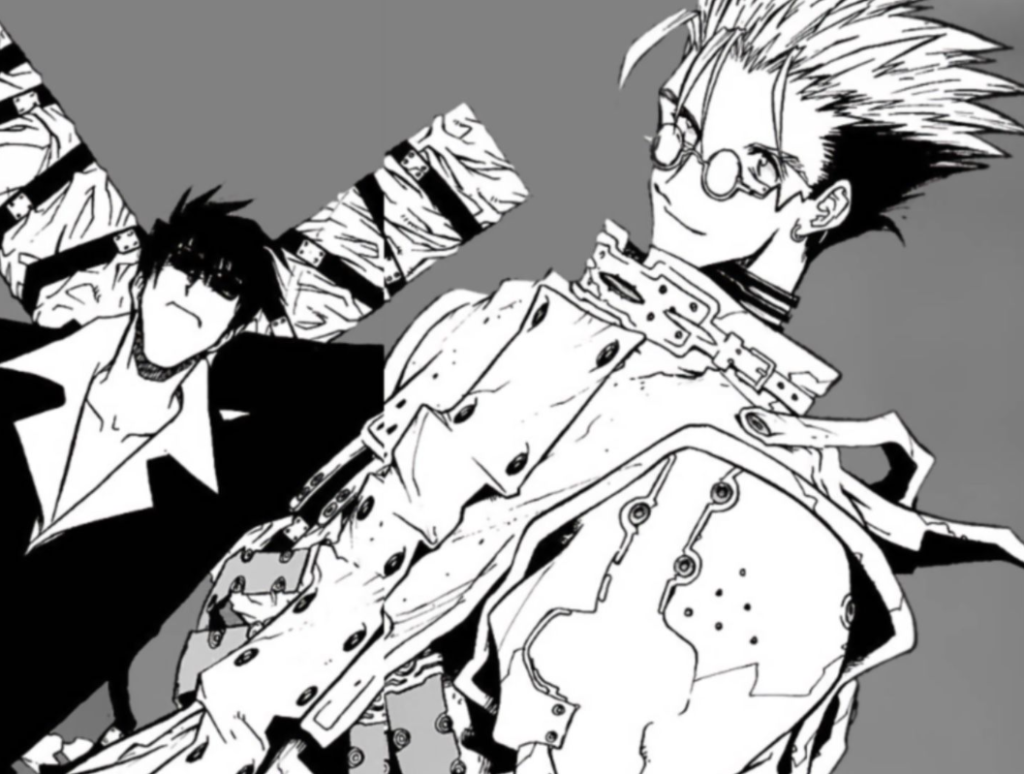
Nicholas D. Wolfwood is one of the most complex characters in the Trigun manga. As a priest carrying a massive cross-shaped weapon, he embodies the contradiction between faith and violence. Wolfwood’s moral struggles and personal history provide a counterpoint to Vash’s pacifism, forcing readers to confront uncomfortable questions about necessity and compromise.
The antagonists in the Trigun manga are not merely villains but ideological opposites. They challenge Vash’s beliefs and expose the flaws and limitations of his worldview. This emphasis on ideological conflict rather than simple good versus evil is one of the manga’s greatest strengths.
Trigun Manga Themes and Philosophical Depth
One of the defining qualities of the Trigun manga is its thematic complexity. At its core, the story grapples with the value of human life. The manga repeatedly asks whether all lives are equally worth saving and what sacrifices are acceptable in the pursuit of peace.
Pacifism is portrayed not as an easy moral high ground but as a path filled with suffering. Vash’s refusal to kill often results in greater personal pain, loss of loved ones, and emotional trauma. The Trigun manga does not provide simple answers, instead inviting readers to engage with its moral questions on a personal level.
The concept of free will also plays a central role. Characters are shaped by their pasts, environments, and choices, yet the manga insists that individuals can choose who they become. This belief in personal agency is woven throughout the narrative and gives the story its enduring emotional impact.
Art Style and Visual Storytelling
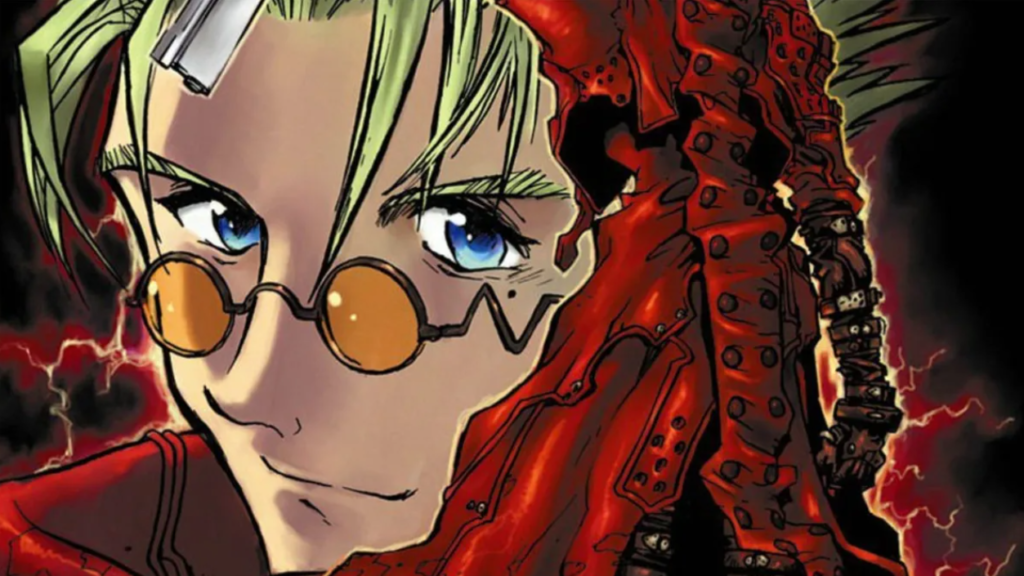
Yasuhiro Nightow’s art style is a major factor in the Trigun manga’s appeal. Early chapters feature exaggerated expressions and dynamic action scenes, reflecting the series’ initial lighter tone. As the story progresses, the artwork becomes more detailed, darker, and emotionally intense.
The Trigun manga uses visual storytelling to convey internal conflict and thematic depth. Facial expressions, body language, and panel composition often communicate more than dialogue alone. Nightow’s ability to balance chaotic action with quiet, reflective moments enhances the emotional resonance of the story.
The evolution of the art mirrors the narrative’s shift toward darker themes. This visual progression helps readers feel the weight of the characters’ experiences and underscores the seriousness of the moral dilemmas they face.
Differences Between Trigun Manga and Anime Adaptations
While the Trigun anime introduced the series to a wider audience, the Trigun manga offers a more comprehensive and mature narrative. The anime, particularly the 1998 adaptation, emphasizes humor and episodic adventures in its early episodes. The manga, especially in Trigun Maximum, delves deeper into character backstories and philosophical conflicts.
Certain story arcs and character developments are either altered or simplified in the anime. The manga provides greater context for key events and explores the psychological impact of violence more thoroughly. Readers seeking a complete understanding of the story’s themes often find the Trigun manga to be the definitive version.
These differences highlight the strengths of the manga as a medium for long-form storytelling. The additional space allows for nuanced character development and a more deliberate exploration of complex ideas.
Cultural Impact and Global Influence
The Trigun manga has left a lasting mark on manga and anime culture. Its blend of genres influenced later works that combine science fiction with western elements. The philosophical depth of the story also helped expand perceptions of what action manga could achieve narratively.
Internationally, the Trigun manga played a significant role in popularizing mature anime and manga in the late 1990s and early 2000s. It introduced many Western readers to themes that went beyond traditional hero narratives, contributing to the growing acceptance of manga as a serious storytelling medium.
Fan communities continue to analyze and discuss the Trigun manga, demonstrating its enduring relevance. Academic discussions, fan essays, and retrospectives frequently cite it as an example of thoughtful genre storytelling.
Why Trigun Manga Remains Relevant Today
Decades after its conclusion, the Trigun manga remains relevant because its themes are timeless. Questions about violence, morality, and responsibility are as pressing today as they were at the time of publication. The story’s refusal to provide easy answers encourages ongoing reflection and discussion.
The resurgence of interest in Trigun through new adaptations and reprints has introduced the manga to younger audiences. These readers often find that the story’s emotional honesty and philosophical depth resonate strongly in a modern context.
The Trigun manga endures because it treats its audience with respect, trusting readers to engage with complex ideas and draw their own conclusions.
Reading Order and Editions of Trigun Manga
For newcomers, understanding the structure of the Trigun manga enhances the reading experience. The story begins with the original Trigun volumes and continues into Trigun Maximum, which completes the narrative. Modern editions often compile these volumes for easier access.
Translations and reprints have improved over time, making the Trigun manga more accessible to international readers. High-quality editions preserve Nightow’s artwork and provide clearer translations that better convey the story’s nuances.
Choosing a complete edition allows readers to experience the narrative as intended, without missing critical character development or thematic elements.
The Emotional Weight of Trigun Manga
One of the most powerful aspects of the Trigun manga is its emotional impact. Moments of humor and lightheartedness coexist with profound tragedy. This balance makes the darker moments hit harder, as readers have grown attached to the characters’ humanity.
Loss, guilt, and hope are recurring emotional themes. The manga does not shy away from depicting the consequences of violence, both physical and psychological. These portrayals give the story a sense of authenticity that resonates deeply with readers.
The emotional journey of the Trigun manga is one of its greatest strengths, leaving a lasting impression long after the final page.
Conclusion
The Trigun manga is more than a classic action series. It is a thoughtful, emotionally rich exploration of morality, humanity, and choice set against a uniquely compelling science fiction western backdrop. Through complex characters, philosophical depth, and evolving artwork, Yasuhiro Nightow created a story that challenges readers to think critically about violence and compassion.
Its continued popularity and influence demonstrate the power of meaningful storytelling. Whether you are discovering it for the first time or revisiting it with fresh perspective, the Trigun manga offers an experience that is both entertaining and intellectually rewarding.
FAQs
What is the Trigun manga about?
The Trigun manga follows Vash the Stampede, a legendary gunman in a harsh desert world who believes in pacifism and struggles to protect human life without killing.
Is the Trigun manga different from the anime?
Yes, the Trigun manga explores darker themes, deeper character backstories, and more complex philosophical ideas than the anime adaptations.
Who created the Trigun manga?
The Trigun manga was created by Japanese manga artist Yasuhiro Nightow.
Do I need to read Trigun Maximum after Trigun?
Yes, Trigun Maximum continues and completes the story, making it essential for understanding the full narrative.
Is the Trigun manga worth reading today?
Absolutely, the Trigun manga remains relevant for its emotional storytelling, moral depth, and lasting influence on manga culture.
For more updates visit: The BeeBom



Pingback: Understanding 12pvoes Meaning, Context, and Digital Significance - The BeeBom
Pingback: 2 x Alberto VO5 Extreme Style Texturising Gum-75ml The Complete Expert Guide - The BeeBom