
In advanced mathematical and computational discussions, new interpretive frameworks often emerge to address modern challenges related to accuracy and efficiency. One such concept attracting attention is pi123, a structured numerical approach that builds upon classical mathematical constants while adapting them for contemporary computational needs. As data-driven technologies expand and algorithms grow more complex, precision has become just as important as theoretical correctness.
This article explores the idea behind pi123, examining its conceptual origins, mathematical grounding, and practical applications. Rather than focusing solely on repetition of a single term, this guide emphasizes understanding, context, and usefulness. The goal is to provide clear, trustworthy insights suitable for researchers, students, and professionals who value accuracy and depth over surface-level explanations.
The Origins and Development of Pi123
The emergence of pi123 can be linked to ongoing efforts within computational mathematics to manage precision more intelligently. Traditional constants, particularly π, have infinite decimal expansions, which pose challenges when implemented in digital systems. Early numerical analysts recognized that repeated approximations often introduced cumulative inaccuracies.
As computing environments evolved, researchers began experimenting with structured numerical representations that preserved mathematical meaning while allowing more controlled approximation. From these explorations, the concept now known as pi123 developed as a precision-oriented framework rather than a single numeric replacement.
Its development has been shaped by academic modeling, applied research, and practical experimentation. The emphasis has always remained on consistency, reliability, and adaptability rather than novelty alone.
Understanding the Mathematical Constant π
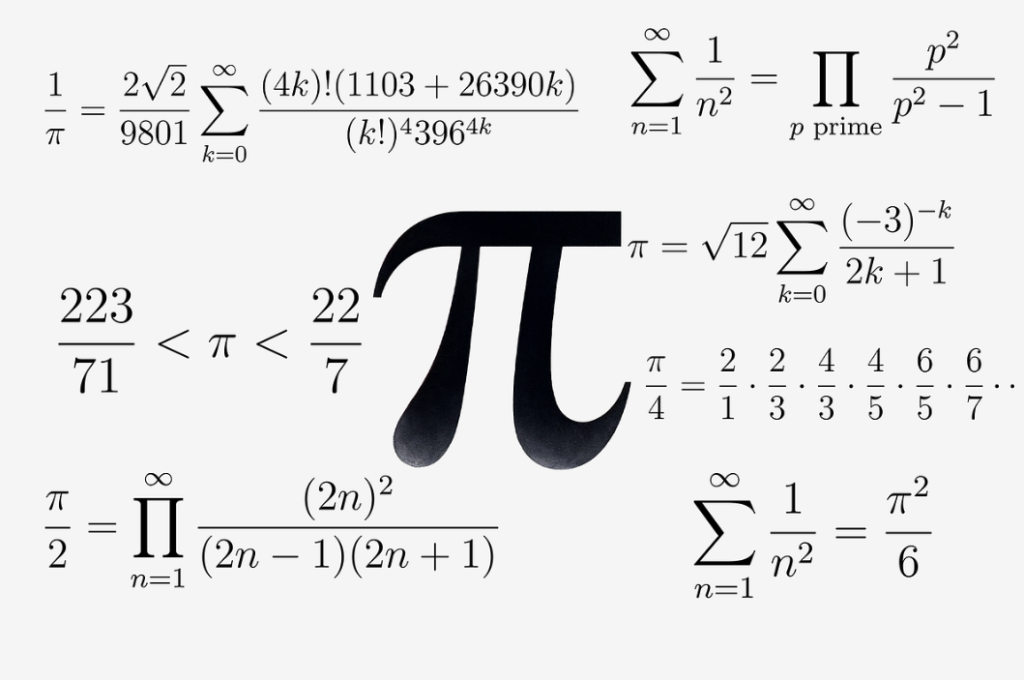
To understand the value of modern numerical frameworks, it is essential to revisit the importance of π. This irrational number defines the relationship between a circle’s circumference and its diameter and appears throughout geometry, trigonometry, physics, and engineering.
Because π cannot be expressed exactly in decimal form, every real-world calculation must rely on an approximation. While common approximations work well in everyday scenarios, they can fall short in high-stakes computational systems where repeated calculations magnify small errors.
Modern mathematical approaches aim to preserve the conceptual integrity of π while improving how it behaves in computational contexts. This is where structured methods such as pi123 gain relevance.
How Pi123 Enhances Precision
Precision is the central motivation behind the development of pi123. Rather than extending decimal places indefinitely, this approach focuses on applying numerical accuracy strategically. The objective is not to achieve infinite precision, but to ensure that each level of approximation aligns with its intended purpose.
By controlling approximation behavior, numerical instability is reduced across simulations and iterative calculations. This method is particularly valuable in systems where precision loss can influence outcomes, such as predictive modeling and algorithmic optimization.
The enhancement comes from smarter approximation, not excessive computation, reflecting best practices in modern numerical analysis.
The Mathematical Foundations of Pi123
The theoretical basis of pi123 rests on well-established mathematical disciplines, including number theory and numerical analysis. It incorporates principles such as convergence behavior, bounded error margins, and adaptive approximation techniques.
Instead of treating constants as static values, this framework views them as functional components within larger systems. This shift allows for more flexible modeling without compromising mathematical rigor.
The strength of the foundation lies in its proof-based design, ensuring that accuracy claims are supported by verifiable mathematical reasoning.
Numerical Relationships in Pi123
A distinguishing feature of this framework is its emphasis on numerical relationships rather than isolated values. By analyzing how values interact within sequences and ratios, greater efficiency can be achieved during computation.
These relationships enable systems to identify patterns that reduce redundant calculations. As a result, precision can be maintained while conserving computational resources.
This relational approach aligns well with modern mathematical modeling, where systems thinking has replaced single-value dependence.
The Role of Advanced Mathematical Techniques
Advanced techniques are essential to maintaining stability and efficiency in precision-focused frameworks. Methods such as convergence acceleration, adaptive series expansion, and algorithmic error correction play a significant role.
These techniques ensure that calculations remain consistent even when scaled across large datasets or extended iterations. They also allow mathematical models to adjust dynamically based on available computational capacity.
The integration of such methods demonstrates the technical maturity of the framework and its alignment with current best practices.
Applications of Pi123 in Mathematics
In mathematical research, structured precision frameworks are particularly valuable in areas involving geometry, trigonometric modeling, and numerical simulation. Large-scale equations often require repeated use of circular or periodic relationships, where small inaccuracies can accumulate.
By applying refined numerical representations, mathematicians can achieve more stable and reproducible results. This is especially important in academic research, where transparency and repeatability are critical.
The adoption of such approaches reflects a broader shift toward precision-aware computation in pure and applied mathematics.
Application in Cryptography
Cryptography depends heavily on mathematical reliability. Secure systems require predictable behavior internally while remaining unpredictable externally. Precision errors can weaken encryption processes and introduce vulnerabilities.
Structured numerical frameworks support cryptographic algorithms by ensuring consistent calculations during key generation and transformation processes. This reduces the likelihood of exploitable patterns caused by approximation inconsistencies.
As security standards evolve, mathematically robust approaches continue to gain importance in cryptographic design.
Application in Machine Learning
Machine learning systems rely on iterative optimization, where numerical stability directly affects performance. Gradient calculations, probability distributions, and convergence rates can all suffer from accumulated rounding errors.
Precision-aware numerical methods help stabilize training processes and improve convergence reliability. This is especially beneficial in deep learning models that perform millions of updates over extended training cycles.
By strengthening numerical foundations, developers can improve both model accuracy and efficiency.
Challenges in Implementing Precision Frameworks
Despite their advantages, precision-focused approaches are not without challenges. Increased accuracy often requires additional computational resources, which may not be practical in all environments.
Another challenge is consistency across implementations. Without standardized guidelines, different systems may apply similar frameworks in incompatible ways.
Education also plays a role. Many practitioners rely on familiar approximations and may be reluctant to adopt new methodologies without clear evidence of long-term benefit.
Future Outlook
The future of structured numerical frameworks looks promising as computational capabilities continue to advance. Improvements in hardware, combined with growing demand for reliable computation, create favorable conditions for broader adoption.
Emerging fields such as quantum computing, advanced simulation, and large-scale artificial intelligence may further increase the need for precision-aware mathematical tools.
Continued research and collaboration will likely refine these methods and expand their application across industries.
Conclusion
Modern computational challenges require more than traditional approximations. Frameworks like pi123 represent a thoughtful response to the growing demand for precision, consistency, and adaptability in mathematical computation.
By building upon established constants while addressing practical limitations, this approach bridges classical theory and modern application. Its relevance spans mathematics, security, and intelligent systems, making it a valuable concept for future-focused research and development.
As precision continues to shape technological progress, structured numerical methods will play an increasingly important role in ensuring trustworthy outcomes.
FAQs
What does pi123 represent
It refers to a structured numerical approach designed to manage precision more effectively in advanced mathematical and computational systems.
Is this concept intended to replace traditional constants
No, it complements existing constants by improving how they are applied in precision-sensitive contexts.
Why is precision so important in modern computation
Small numerical errors can compound over time, leading to inaccurate results in simulations, security systems, and data-driven models.
Can this approach benefit artificial intelligence
Yes, stable numerical foundations can improve training reliability and convergence behavior in machine learning models.
Is this framework widely adopted
It is still evolving, but interest continues to grow as precision requirements increase across scientific and technological fields.
For more updates visit: The BeeBom